


Her Sister Is a Urology Nurse. What She Told Her About Recurring UTIs Changed Everything.

A reader story, as told to our editors
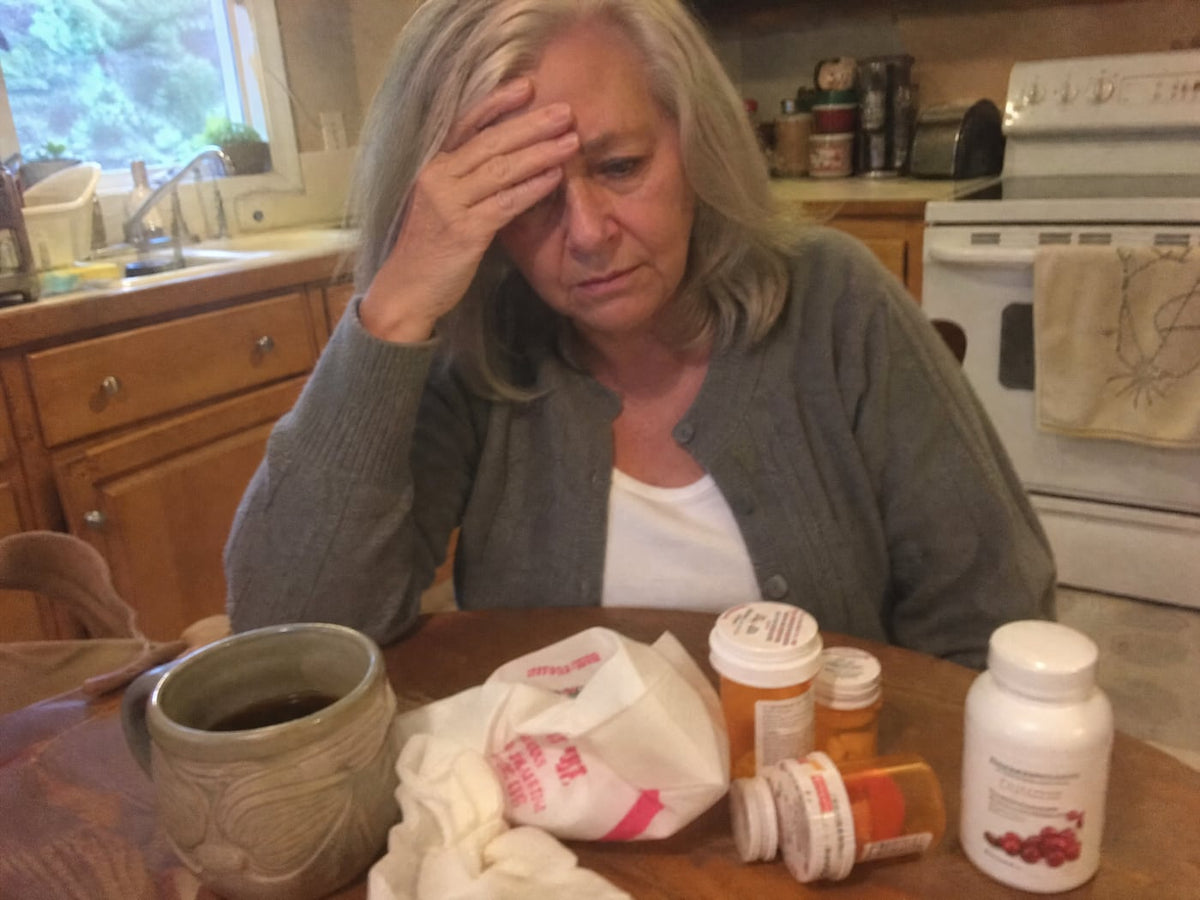
After my seventh round of antibiotics in eleven months, my sister, a nurse, sat me down and said something I will never forget. "The antibiotics are treating the infection you have. Your doctor isn't helping you prevent the next one."
My sister was basically telling me to ignore the doctors I had trusted for years. But Diane has checked women into a urology clinic for twenty years. She sees the same faces come back every few weeks with the same infection. The same prescription, filled for the sixth, seventh, eighth time. Charts an inch thick with the same three words: recurrent urinary infection.
She sees the women who did everything they were told and ended up right back in that waiting room anyway.
"You're not being treated. You're being recycled."
- If you've had round after round of antibiotics and the infection keeps coming back,
- if you've tried cranberry juice, cranberry pills and D-mannose and nothing held,
- if you've started mapping every bathroom and cancelling plans around your own body,
you need to hear what she told me.
The Night I Became One of Them
My third UTI in four months hit on a Tuesday in November, halfway through my granddaughter's school play. I felt the burn start and I knew. I sat in that tiny auditorium chair with my legs crossed, smiling up at Emma on stage while my body betrayed me again.
I drove straight to urgent care after the curtain call. I didn't even go backstage to tell her she did a good job.
The doctor glanced at my chart. "Looks like you've been here before." Seven days of antibiotics. Drink plenty of water. I could have written the prescription myself by then.
That was round seven in eleven months. And I could feel the Nitrofurantoin working a little less every time.
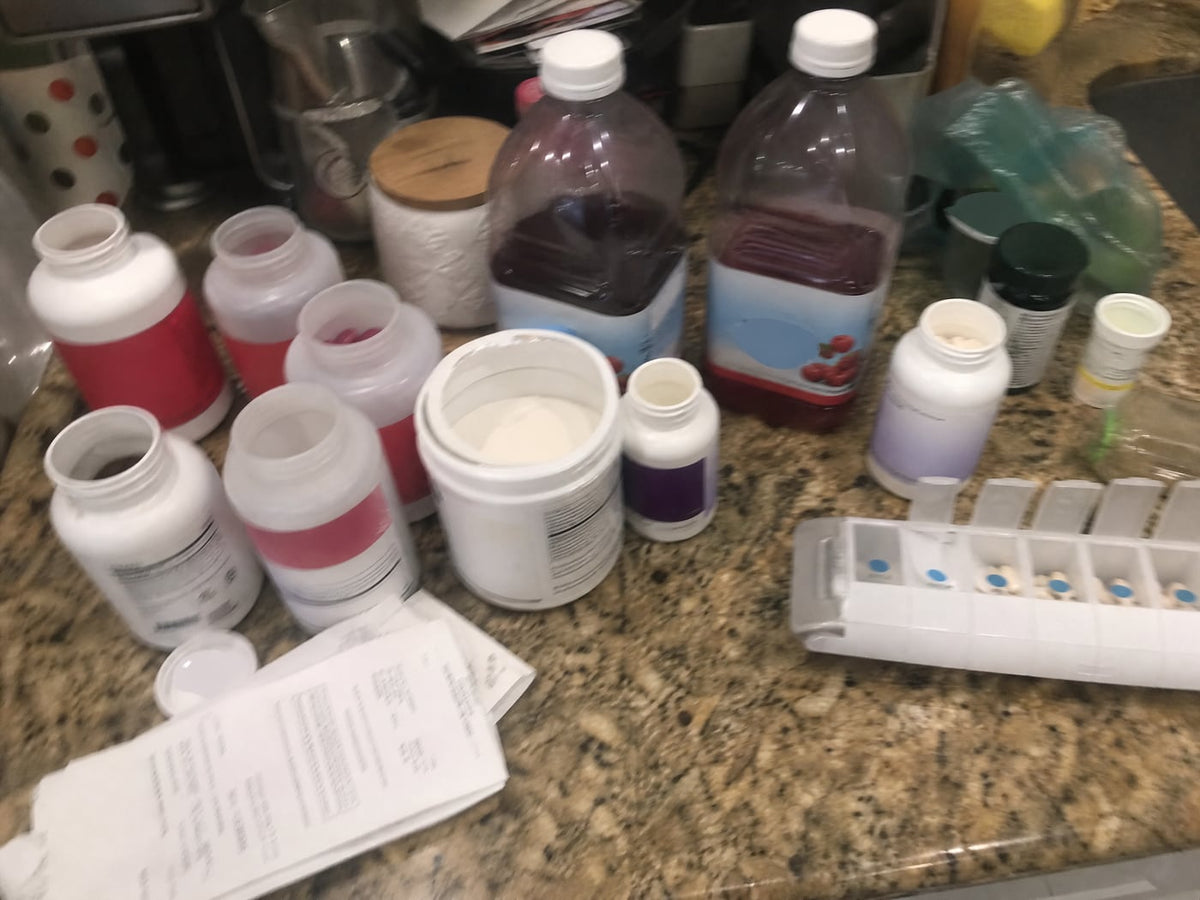
I'd tried everything people swear by. Gallons of cranberry juice. Two brands of cranberry pills from the drugstore. D-mannose powder. A probiotic my friend loved. I read studies at 2am. I wasn't guessing. I just couldn't find anything that held.
Between the D-mannose, the cranberry, the probiotics, and a full round of MonaLisa Touch laser, almost $2,400 that helped for a couple of months and then faded like everything else, I had spent close to $4,000 in that one year. All of it trying to stop something my doctor kept calling common after menopause.
The infections kept coming back.
I told Diane about the urgent care visit over the phone, and she went quiet. Then she asked if she could come over that Saturday, because she needed to talk to me about something. She lives an hour and a half away and she works doubles three days a week. She does not drive out on a Saturday unless it matters.
What My Sister Told Me at the Kitchen Table
She came with her laptop and a folder of printed studies. My little sister, the one I used to quiz on spelling words at this same table, was about to explain my own body to me.

First, she wanted me to understand something. She wasn't telling me to skip antibiotics. When you have an active infection, you treat it. Period. BUT
She asked me if I knew how many women she checks in every week who are on their fourth, fifth, sixth round of antibiotics for infections that keep coming back no matter what they do. I told her I did not want to think about that.
Almost all of them are past menopause, she said. Almost all of them have tried cranberry and D-mannose. Almost all of them have been told to drink more water. And almost all of them would be back in her clinic within six weeks.
I asked her what I was supposed to do. Stop treating the infections?
No, she said. I was supposed to understand why they kept coming back.
Why It Keeps Coming Back
Most UTIs, she said, are caused by E. coli, bacteria that normally live in the gut. The problem isn't that they get in. It's that they hold on. E. coli have tiny hair-like hooks that let them latch onto the wall of your bladder, so flushing with water alone can't wash them away.

After menopause it gets worse. Lower estrogen thins the tissue down there and the protective good bacteria start to fade, which makes it easier for E. coli to get a foothold. And every round of antibiotics, while it clears the infection, also knocks out good bacteria along with the bad.
And once they were gone, nothing stood in the E. coli's way. That was when the infections started. Not because of hygiene. Not because of sex. Because the bacteria that had protected me for decades lost the place they needed to live.
I asked her why Dr. Brennan never explained any of this. Diane closed her eyes for a second. The way she does when she is trying not to say something she will regret. This time she said it anyway.
The protocol does not reward a doctor for explaining it, she told me. Diagnose, prescribe the antibiotic, say drink water and wipe front to back. Maybe mention cranberry. And if you come back enough times, put you on a low-dose antibiotic every single day. That is the whole script.
She said she has watched that protocol fail the same women for twenty years and she is not allowed to say one word about it. She said it makes her sick.
"So you clear one infection," she said, "and you're right back where you started. Sometimes worse."
My doctor was not an evil woman, she said. She was following a protocol that treats every infection like it is brand new. But mine were not new. They were the same failure repeating itself.
And then Diane said the part that made her angriest. If a man's body did this to him every single month, she said, there would already be a one-pill cure. Insurance would cover all of it. Every urologist in the country would know the answer cold. Instead they hand you the same prescription your mother got and tell you to wipe front to back. Like it is 1975.
I felt something in my chest I had not let myself feel in a year. Not the sadness. The anger. The clean kind.
I asked her about the antibiotics. The antibiotics were the worst part of all, she said. Every time you take them to kill the E. coli, they kill whatever good bacteria you have left. So the infection clears and you feel better, but now you have even less protection than before. That is why they come back faster. Every round sets up the next one.
I sat with that for a long time. I was not being treated. I was being recycled. Seven rounds of antibiotics in eleven months, and every single step made the next infection more likely. That is not medicine. That is a subscription.
Why Everything Else Failed
I asked her why none of the things I'd tried had worked. She went down the list.
Cranberry juice? "You'd have to drink a lot of it, every day, and most of it is sugar." Even the FDA describes the evidence for juice as limited and inconsistent.
Drugstore cranberry pills? This was the one that surprised me. "Cranberry isn't the problem," she said. "The dose is." Most pills use whole-fruit powder or weak 4:1 to 10:1 extracts. The studies that showed results used far more cranberry than those pills deliver.
D-mannose? In 2024 a large trial of 598 women published in JAMA Internal Medicine found that daily D-mannose worked no better than a placebo for preventing repeat UTIs.
Vaginal estrogen? "That's a real option for a lot of women after menopause," she said, "and you should ask your gynecologist about it." With our family's breast cancer history I wanted to talk it through with my doctor first, and I did.

I thought about the dinner with my closest friends I'd cancelled three months earlier because I felt an infection starting. I sat on my couch in the dark and cried. Not because of the burning. Because my whole life had started revolving around it.
I thought about my husband. About how I'd stopped being intimate because the last three times had ended in an infection within 48 hours.
So I asked her the only question that mattered. "Then what actually helps?"
The Research That Changed My Mind
She opened the folder. The first thing she showed me was a 2023 Cochrane review, the kind of study doctors trust most because it pools all the good trials together. It looked at 50 trials and 8,857 people. In women with recurring UTIs, cranberry products lowered the risk of another UTI by about 26%.
Then a placebo-controlled trial of 373 women with a recent UTI, published in the American Journal of Clinical Nutrition. Over 24 weeks, the women taking cranberry every day had 39 UTIs versus 67 in the placebo group.
And then the part that explained why my pills never worked. Researchers found that cranberry's active compounds, called PACs, make it harder for E. coli to latch onto the bladder wall. But it took a meaningful daily amount to see that effect in urine. Far more than what's in a typical drugstore capsule.
"Cranberry was never the problem. Your pills were underdosed."
What Diane Told Me to Look For
I asked her what to buy. She said most cranberry products fail the same three tests.
- A true concentrate, not fruit powder. Powdered whole cranberry is mostly fiber and water weight. You want a high-ratio concentrate.
- Enough cranberry per serving to match the research. Not a sprinkle added so it can say "cranberry" on the label.
- Independent lab testing and no sugar. If it isn't tested, you don't know what you're taking.
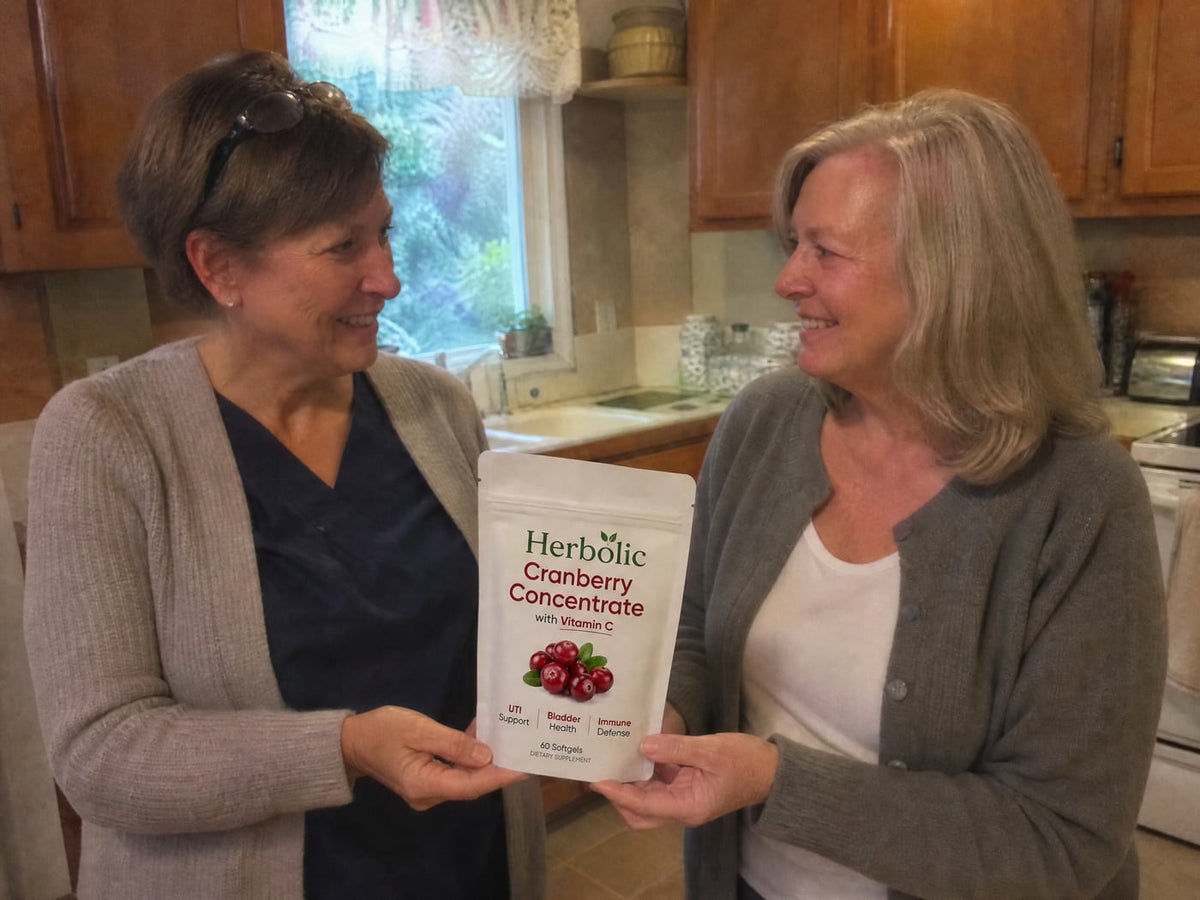
She'd already found one: Herbolic Cranberry Concentrate. A 100:1 cranberry concentrate, so 400mg of extract equals 40,000mg of fresh cranberries, in just two tiny softgels a day. Reinforced with 100% of your daily vitamin C. No sugar, no chalky pills, no cranberry burps. Non-GMO, gluten-free, and third-party lab tested.
She ordered it for me before she left, then hugged me in the driveway the way she did when we were girls and one of us was scared.
- Is it a high-ratio concentrate, or just "cranberry fruit powder"?
- How many milligrams of fresh-cranberry equivalent per serving?
- Is it third-party lab tested? Does it contain sugar?
Backed by our money-back guarantee. If it isn't right for you, you get a full refund.
What Happened Next
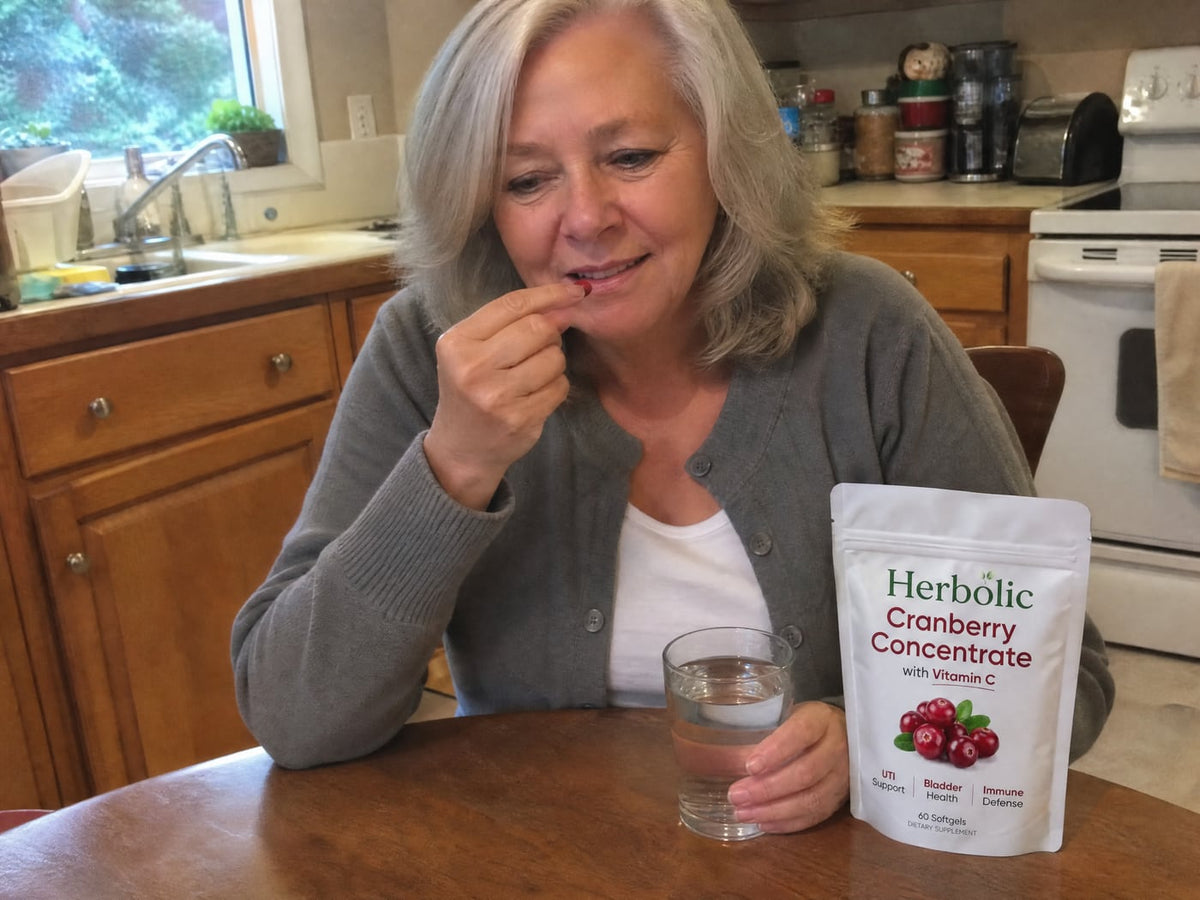
Weeks 1 to 2. Honestly, nothing dramatic. Two tiny softgels with breakfast. No aftertaste, no upset stomach. I texted Diane that I wasn't sure it was doing anything. She told me to give it time.
Weeks 3 to 4. The urgency started to fade. That constant "I need to go" feeling, even when I didn't, just quietly eased off. I slept through the night for the first time in months.
Weeks 5 to 8. No flare-up. I stopped panicking at every tiny twinge. I stopped carrying a backup prescription in my purse.
Month three. My husband and I were close again, without planning around the aftermath. Afterward I lay there waiting for the burning. It didn't come.

At my next gynecologist appointment, I told her what I'd been taking and showed her the studies. She told me to keep going.
Then I called my sister. Five months, I told her. No infections. She was quiet for a second, and then her voice cracked. "I see women our age every day," she said. "They come back a little more defeated every time. I wasn't going to watch that happen to you."

I think about the woman I was a year ago. Smiling through a school play with an infection starting. Mapping bathrooms. Cancelling dinners. Spending a fortune on things that were never dosed to work.
If that's you right now, please hear this: you haven't failed. You just haven't been given the whole picture. Talk to your doctor about why your infections keep coming back. And if you try cranberry, try one that's actually dosed like the research.
How the Options Compare
| Treats an active infection | Research-backed for lowering repeat-UTI risk | Daily, drug-free, no sugar | |
|---|---|---|---|
| Antibiotics | ✓ | Short-term only | ✗ |
| Cranberry juice | ✗ | Limited, inconsistent | ✗ Sugary |
| Typical cranberry pills | ✗ | Often underdosed | ✓ |
| D-mannose | ✗ | 2024 trial: no better than placebo | ✓ |
| Herbolic Cranberry Concentrate | ✗ (see a doctor) | ✓ 100:1, 40,000mg equivalent | ✓ |
No supplement treats an active UTI. If you have symptoms such as burning, urgency, fever, back pain or blood in your urine, see a doctor promptly.
Real Women, Real Results

"I never had a UTI in my life until I hit 52. Then suddenly it was every few weeks and I was miserable. My gynecologist said it's common after menopause but I didn't want to be on preventative antibiotics forever. Started Herbolic three months ago and I haven't had a single infection since. The 40,000mg concentration is what sold me — every other brand felt like a waste of money."
Melissa K. · Verified Buyer · Post-Menopausal
"For almost two years I couldn't go more than 8 weeks without another UTI. My doctor kept prescribing antibiotics and warning me about resistance, but I didn't know what else to do. I tried every cranberry pill on Amazon and nothing moved the needle. Herbolic is the first thing that's actually worked. I'm 5 months in without a single flare-up. I finally feel like I have my body back."
Sarah M. · Verified Buyer · Recurrent UTI Sufferer
"My mom is 74 and was getting UTIs constantly — one even landed her in the hospital with confusion that turned out to be a UTI-triggered delirium. Terrifying. Her doctor mentioned cranberry supplements but said most of them are underdosed. Herbolic's 100:1 concentration was exactly what she needed. Six months in and she hasn't had a single infection. I'm ordering these on subscription now."
Jessica R. · Verified Buyer · Caregiver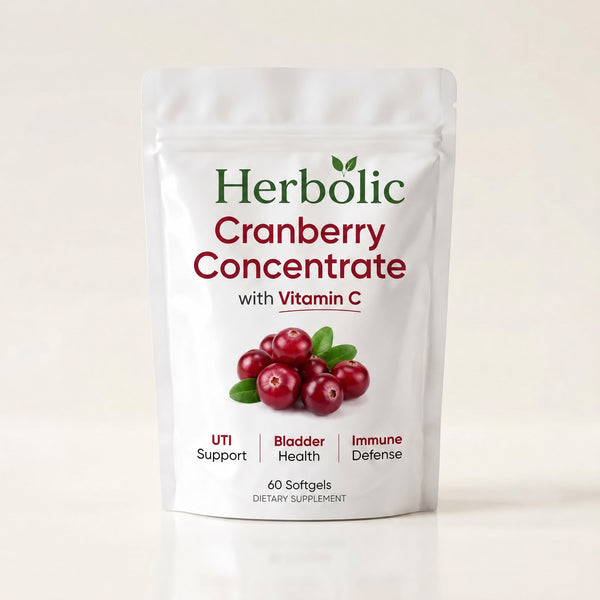
- 100:1 cranberry concentrate, 40,000mg fresh equivalent
- Helps keep bacteria from sticking to the bladder wall
- 100% DV vitamin C, no sugar, no aftertaste
- Non-GMO, gluten-free, third-party lab tested
- Money-back guarantee
Questions Women Ask Before They Start
Is it safe to take every day?
Cranberry concentrate is a whole-food botanical, and 2 softgels a day is designed for daily use. If you're pregnant, breastfeeding, take a blood thinner such as warfarin, or have a history of kidney stones, show the label to your doctor before starting.
Can I take it with antibiotics or D-mannose?
Yes. Many women take it alongside a course of antibiotics to support their urinary tract between infections. Always finish any antibiotics your doctor prescribes, and check with your doctor if you take prescription medications.
How long before I notice a difference?
Many women notice more comfort and less urgency within the first few weeks. The bigger goal, longer stretches without a flare-up, usually takes 8 to 12 weeks of daily use. Consistency matters.
How do I take it?
Two small softgels once a day with a full glass of water, ideally with breakfast. One pouch is 60 softgels, a 30-day supply.
What if it doesn't work for me?
Every order is backed by our money-back guarantee. If it isn't right for you, email support@tryherbolic.com and you'll get a full refund.
Backed by our money-back guarantee. If it isn't right for you, you get a full refund.
References
- Williams G, et al. Cranberries for preventing urinary tract infections. Cochrane Database of Systematic Reviews, 2023. Summary
- Maki KC, et al. Consumption of a cranberry juice beverage lowered the number of clinical urinary tract infection episodes in women with a recent history of UTI. Am J Clin Nutr, 2016. Report
- Howell AB, et al. Dosage effect on uropathogenic E. coli anti-adhesion activity in urine following consumption of cranberry powder standardized for proanthocyanidin content. BMC Infect Dis, 2010. Full text
- Hayward G, et al. d-Mannose for prevention of recurrent urinary tract infection among women: a randomized clinical trial. JAMA Intern Med, 2024. Full text
- U.S. Food and Drug Administration. FDA announces qualified health claim for certain cranberry products and urinary tract infections, 2020. FDA